

I Spent A Day With Substack and Substackers
The best parts weren't on the schedule.

When the invite came through for Substack’s The Once and Future Media Forum event, I jumped at it. I’d hoped Julia would come too, but it was the girls last day of school, so I went up to New York for the day on my own, with high hopes and a goal I set at the start of the year: do more work things in person. I’d just written about that in Infrequent AI, after heading up the week before to speak on an AI panel. So here’s the reflection from another in-and-out trip to New York.
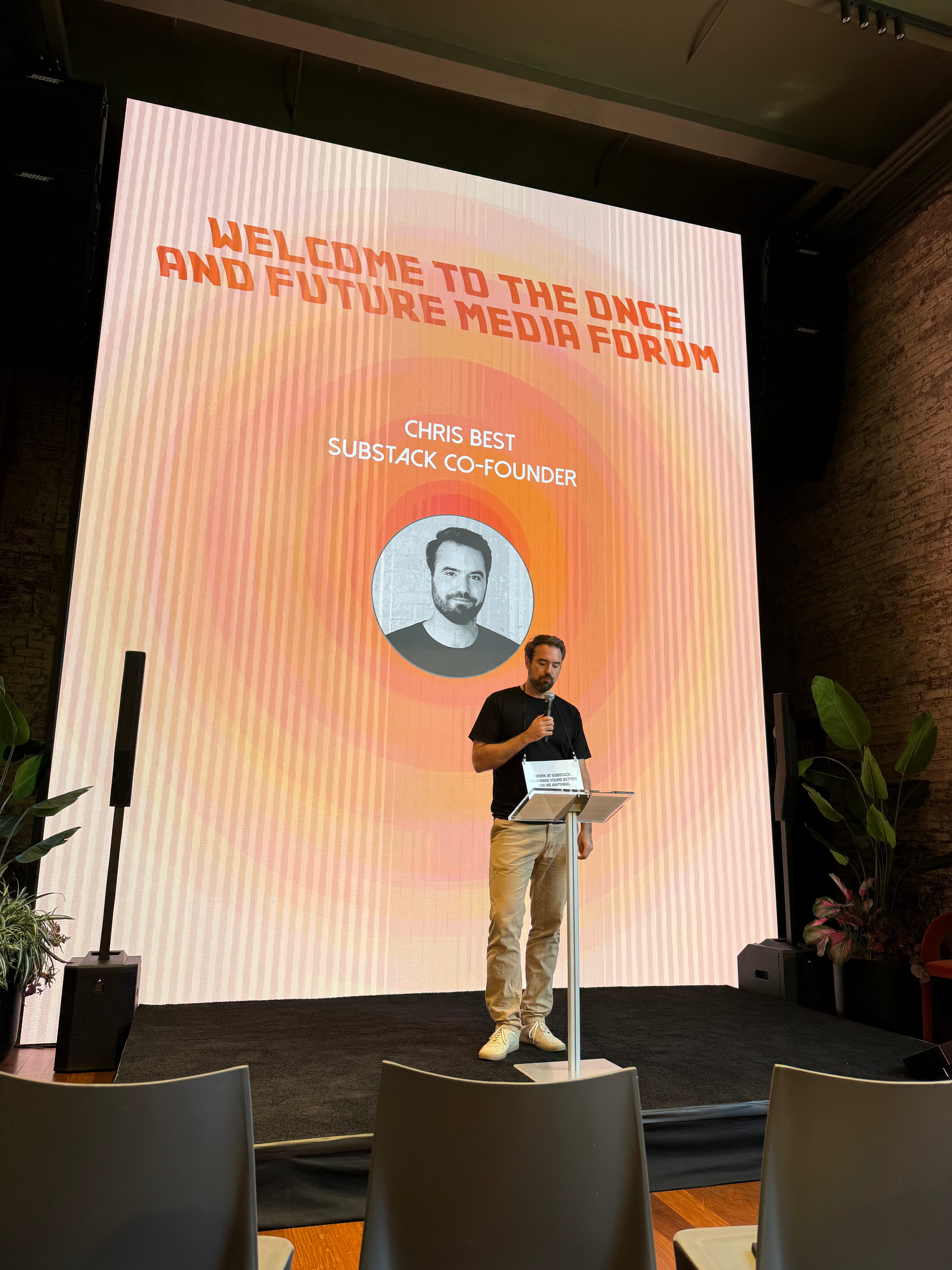
I went in skeptical. A full day is a lot to give up, and I wasn’t sure whether it would be a long round of applause for Substack and the new era of media, or a working session where publishers trade what’s growing their businesses. It landed closer to the first. It was still worth the day. The majority of the value just wasn’t in the panels.
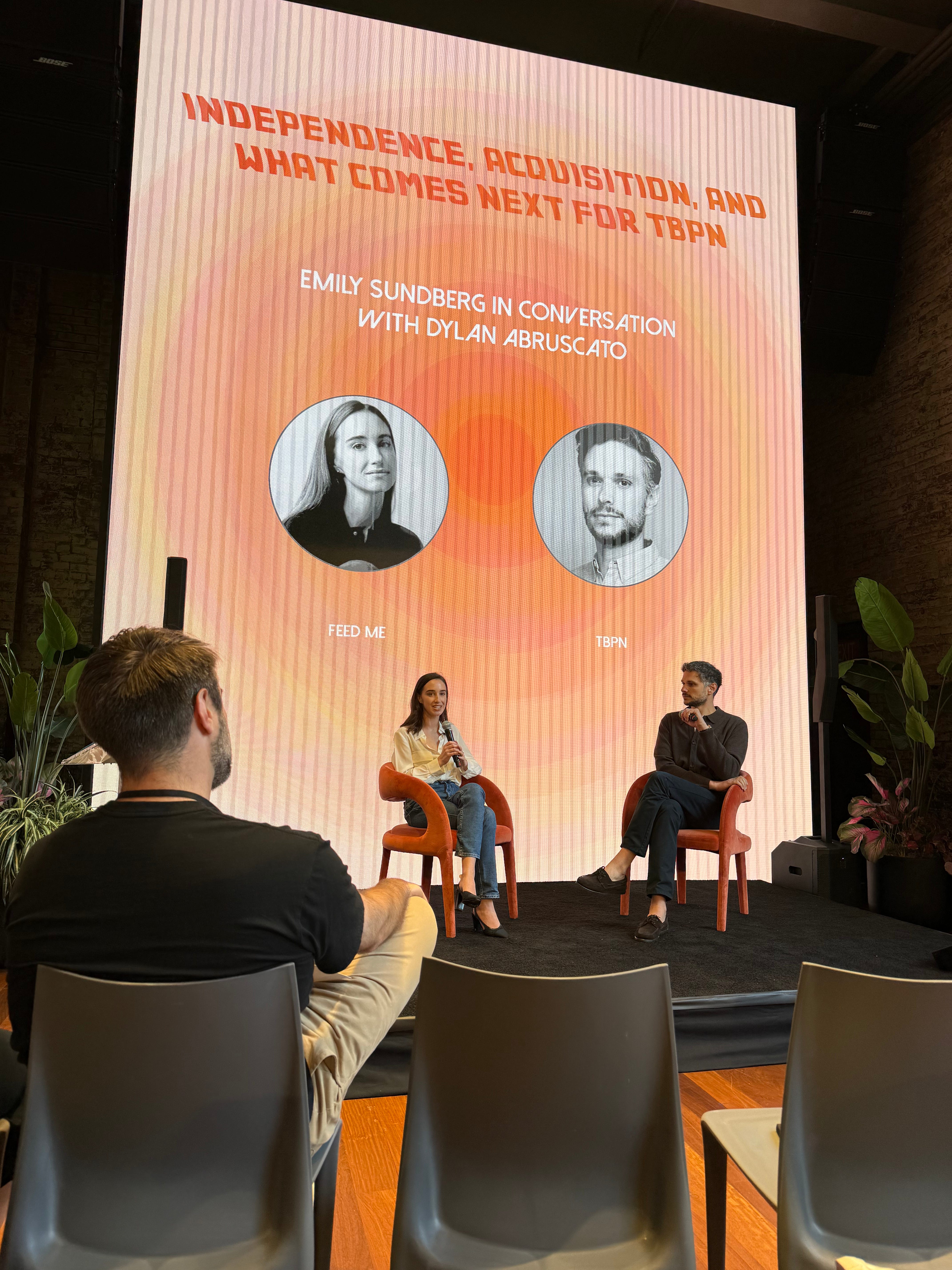
It was in the gaps. The conversations during breaks and over drinks at happy hour, where I could compare notes with other publishers and the Substack team without a panel in the way. Caroline Chambers and I became fast friends trading our best growth ideas, the have-you-tried-this, have-you-tried-that kind. And one session on stage was worth the trip on its own: Emily Sundberg from Feed Me interviewing TBPN president Dylan Abruscato (full recording here), which OpenAI just acquired.
Note all videos from the panels are available on Youtube.
So here’s what I flew home with.
The ideas worth keeping
Live is winning, and on-demand is getting cheap. When you can watch anything anytime, none of it feels urgent. The things that hold their value are live, fleeting, exclusive. Those three factors were strong enough to get me in the room that day. You have to be there. Making a bet on live video looks smart for the right people that can pull it off.
“Overnight success” is a years-long story. The people who look like they appeared from nowhere usually spent years getting good at something hard to copy, and often built a diversified set of experiences that make them better-rounded, with more interesting stories to tell.
AI is sorting what gains value and what loses it. Summaries are losing value because anyone can generate one in seconds. Secrets, real opinions, and proof that a person is behind the words are gaining it. Jasmine Sun, a former Substack employee who is now an independent writer, put it well in The Independent Writer’s Advantage.
The world is bigger than your feed. Substack lets tiny, specific niches not just exist but make a living. Spend a day off your own algorithm and you find whole worlds of writers and readers you would never have stumbled into. The internet is not as small as your feed makes it feel.
At The Free Press, the word “content” is banned. I had never thought of “content” as a bad word. Now that I have heard it once, I can’t unhear it. It is the stuff you make to fill a slot. The work people love has a better name: an essay, a show, a letter.
The subscription model is creaking
This one probably matters most to you, since you are likely reading this as a paying subscriber to a handful of newsletters yourself.
Everyone is tapped out. There are only so many subscriptions a person will pay for, and the wallet fills up fast. I felt it in my conversations at the event, and I feel it in my own inbox. Even the publishers in that room with 10k+ subscriber lists told me the same thing: turning free readers into paying ones is harder than it has ever been. When the biggest names are stuck against the same wall, it’s not a them problem. It’s a model problem.
The current model rewards the publication. It should reward the post.
Right now I tell people to start a Substack, and then I go quiet, because I don’t actually know how they’ll make money. I’m not going to pay $80 a year for a newsletter I’ll read four times. Nobody is. So they fall back to the free plan, which is the exact problem Substack was built to solve.
But a great post is a different thing than a great publication. You don’t need the best newsletter on the internet. You need to write five to ten posts a year that people genuinely want, and get paid for those. While I’ve reflected longer on this challenge here’s what I came up with: instead of the $80 annual sub, a reader drops $30 up front and unlocks the posts they actually want for $5 each, topping back up as they go. For the great publications, plenty of readers unlocking posts do the math and switch to annual anyway, but now they’ve subscribed because the writing earned it, not because the paywall forced the choice. It’s the difference between buying the album and buying the one song.
Substack admits internally this is a live debate and that’s all they could say about that. I hope they get there. The all-or-nothing subscription was the right way to start a movement. I’m not sure it’s the right way to carry it.
I asked a version of this in my Instagram Stories, and I want your take here too. How should Substack grow from here? What would actually make you pay for the writing you love? Tell me in the comments.
— Thomas
YES to the idea of paying for individual posts! I am burned out by the monthly/yearly subscriptions. I pay for a handful (yours included), but I just can't justify paying for all the ones I want to subscribe to, it just adds up too fast and with an unknown return.
I would love a subscription service at Substack where I can read a certain number of posts across a variety or substacks in a month or per week, rather than just subscribing to one persons feed. I follow a lot, but I’m not going to pay hundreds a month to access them all. I’m especially not going to pay to read a Substack of someone that is an infrequent or sporadic poster, and I’ve found even professional journalists on here can be that. If you’re on holiday for a month and don’t post, or sick for a week etc, it’s not exactly like signing up for a magazine or newspaper that continues on regardless. This is a big roadblock to considering what you’re subscribing to when paying. I subscribed to yours as it’s consistent and covers a variety of areas and perspectives… you’re one of only two paid subscriptions I have (and have just rolled over into year 2 of subscribing).